
From time immemorial, Avalon forest was the Great Emerald of the Misty Isle, a pristine and sprawling tropical and temperate forest inhabited by the children of the gods. For countless primeval eons, these young naiads and hydriads played in the numerous streams and ponds while dryads explored and hunted from the forest floor all the way to the treetops.
Amid the beautiful chaos of endless mirth, the Gods decide to impose a sort of order by appointing a race of magical beings called Fairies or Fae to caretake and police the forest. The fairies are charged with maintaining balance among its plants, beasts, rivers, and magical creatures. Oberon Stormtide is crowned King of the Fair Folk beneath the mighty Yggdrasil, the oldest and largest tree in Avalon. Later generations regard this coronation as the beginning of recorded Avalonian history.
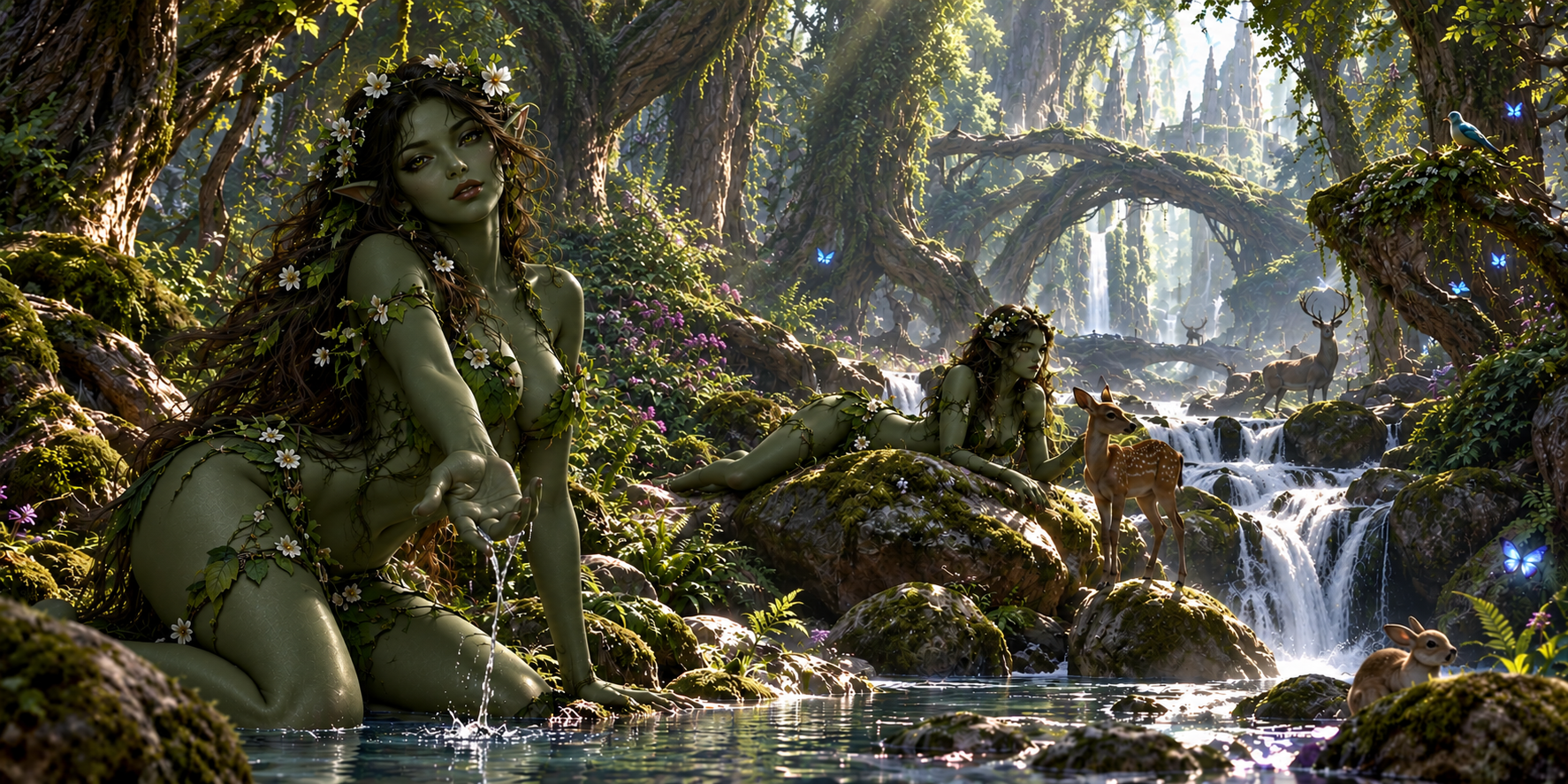
The year is remembered bitterly by some of the oldest nymphs and treants, even nearly one thousand years later. The first goblins appeared in droves, in what was at the time viewed as an invasion. Goblin tribes arrive on the northern shores and settle in Avalon's deep woods. Their arrival immediately disrupts the balance maintained by the fairies. The goblins hunt indiscriminately, consuming deer, magical beasts, and the occasional nymph.
After the goblin chieftain Grubnub the Hungry devours a sacred white stag, Oberon orders the fairies to drive the goblins from Avalon. Twenty-seven goblin tribes unite against them. The war ends inconclusively after nine years, beginning centuries of hostility between goblins and nearly everyone else.
Several hundred elves fleeing wars beyond Avalon enter the eastern forest via the sea. The fairies permit them to remain temporarily. The settlement becomes permanent, however, and the newcomers establish the woodland village of Godwyn's Rest.
Elven farmers begin clearing sections of woodland for orchards. Fairies retaliate by enchanting their crops, while elves cut down several fairy nesting trees in revenge. What begins as a dispute over twelve acres of forest becomes a twenty-year feud remembered mostly for its absurdity.
Oberon Stormtide is deposed after a vote of no confidence by the inner court. Titania Greenthorn is crowned in his stead, adopting a more tolerant policy toward the elves, formally recognizing several elven settlements in exchange for strict limitations on logging and hunting.
Fairies, nymphs, and elves celebrate the lasting formal peace between their peoples. The nymph Alraune of the Willowmere becomes famous for convincing Lord Oberon and the elven lord Thanatiel to settle a territorial dispute through drinking contests rather than warfare. Goblins are conspicuously not invited.
Goblin chieftain Drebnab Skullbiter unites twenty-seven tribes and attacks the elven settlements along the eastern forest. Thousands of trees are burned during the fighting. Fairies intervene only after the destruction threatens nearby sacred groves, creating lasting resentment among the elves for their inaction.
A succession dispute following Titania's disappearance divides the fairies. Those supporting the missing Titania Greenthorn become the Seelie Court, while her rivals gather around Oberon Stormtide and become the Unseelie Court. Both claim to be the legitimate guardians of Avalon.
The Seelie and Unseelie Courts openly wage war. Fairy magic causes entire sections of Avalon to experience unnatural seasons: endless autumn in the west, permanent spring in the east, and a winter lasting eleven years around Yggdrasil's Hearth. Elves and nymphs desperately attempt to remain neutral, while goblins blatantly side with King Oberon due to his aggressive policies against the elves.
An elven hunting party mistakenly kills three Unseelie fairies during a nighttime skirmish. Unseelie forces retaliate by destroying an elven village. The resulting battle draws Seelie fairies, elves, goblin mercenaries, and several angry nymphs into the same conflict for completely different reasons.
Exhausted by generations of petty warfare, representatives of the Seelie, Unseelie, elves, and nymphs negotiate the second general peace in Avalon's history. Goblins attend the negotiations but are expelled after attempting to eat one of the elven delegates.
Following decades of goblin raids, an alliance of elves and Unseelie fairies launches a campaign to destroy the largest goblin tribes. Thousands of goblins are killed or driven into the northern swamps. The survivors preserve bitter stories of the event for centuries.
Elves establish Rivenhold, the largest permanent settlement yet constructed within Avalon. Unlike earlier villages, it incorporates living trees into its architecture and is designed according to fairy principles of forest stewardship. Its construction marks the beginning of widespread acceptance of elves as true inhabitants of Avalon rather than outsiders.
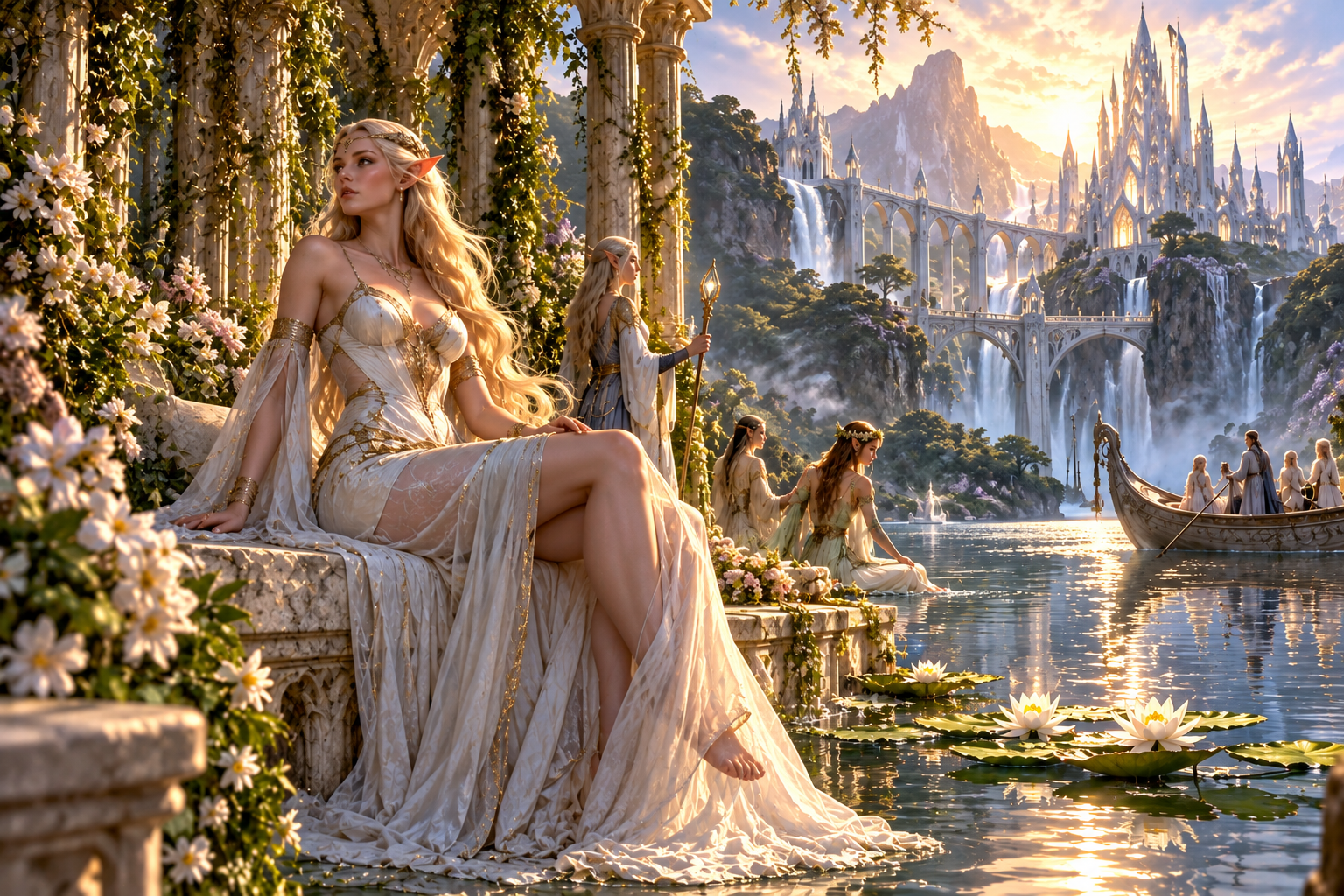
A small band of strangely dressed elves arrives from the distant industrial city-state of Metropolis. They speak of factories, engines, enormous cities, and machines powered by steam and arcane crystals. Avalonian elves allow the refugees to settle among them, although many fairies distrust their mechanical devices.
Seelie Queen Alraune claims authority over several Unseelie groves, reigniting the old rivalry between the courts. For sixteen years, fairies fight over borders, titles, insults, marriages, and ancient grievances. The elves increasingly view fairy politics as dangerously detached from the problems facing the wider forest.
Avalonian scouts report enormous columns of smoke beyond the far shore of the Small Sea. Metropolitan surveyors are discovered mapping rivers and mineral deposits near Avalon's borders. Their representatives insist that Metropolis seeks only trade.
Metropolis constructs a small but unsightly railway across part of the eastern edge of Avalon by the Small Sea. Hundreds of trees are felled to clear its path. The Unseelie Court protests, but the Seelie court minimizes the issue and refuses to cooperate with their rivals. Elven leaders are likewise divided, some arguing that Metropolitan trade might benefit their settlements.
Metropolitan lumber companies again cross the Small Sea and clear Silvergrove, an ancient woodland inhabited by nymphs. The inhabitants flee rather than fight. Within two years the grove has been converted into farms and a steam-powered lumber mill.
Metropolitan troops searching for saboteurs encounter a gathering of river nymphs. The confrontation ends with dozens of nymphs killed. The surviving nymphs, previously among the least warlike inhabitants of Avalon, begin attacking Metropolitan patrols along the rivers with animals magically coaxed to violence.
Metropolitan forces stage a false flag operation as a pretext to seize an outlying village near Rivenhold and surrounding farmland. Avalonian elves led by Aelwyn Starleaf defeat them after three days of fighting. Several Metropolitan expatriates fight alongside the Avalonians, transforming what Metropolis describes as a policing action into an open war between two elven societies.
Metropolitan loggers accompanied by soldiers enter a fairy sanctuary and cut down trees considered sacred since the primeval era. When the resident fairies attack, Metropolitan incendiary weapons burn the entire grove. Seelie and Unseelie chroniclers independently describe the event as sacrilege.
Metropolitan soldiers destroy a nymph grove after resistance fighters use its sacred pool as a hiding place. Unlike at Naiad's Crossing, the surviving nymphs immediately retaliate. Within weeks, Metropolitan barges vanish beneath rivers, wells become poisoned with magical algae, and entire patrols are drowned by suddenly flooding streams.
The goblin chieftess Grima discovers Metropolitan settlers establishing farms on traditional goblin hunting grounds. His tribes massacre the settlers and begin attacking mines and lumber camps. For the first time, elves find themselves quietly celebrating news of goblin raids.
Metropolitan artillery destroys Godwyn's Rest, the oldest elven settlement in Avalon, after its inhabitants refuse to negotiate the city's sale. The destruction shocks Avalonian elves who had continued to hope for negotiations with their industrialized cousins. Thousands join militias afterward, and Elven sentiment towards Metropolis turn decidedly bitter.
A Metropolitan army advances toward the heart of Avalon. Seelie fairies, Unseelie fairies, elves, nymphs, and goblins all participate in the defense, though under separate commanders. Their mutual distrust nearly causes disaster, but a goblin counterattack led by Gapcraw the Mighty unexpectedly saves the elven flank. The Metropolitan advance is halted.
Representatives of Avalon's peoples meet to coordinate resistance. Arguments nearly collapse the gathering: the fairies dispute precedence, elves demand centralized command, nymphs demand vengeance for their massacred sisters, and goblins demand unrestricted hunting rights. Nevertheless, the council establishes the first shared system of scouts, messengers, and battlefield signals.
After more than five centuries of rivalry, Seelie Queen Nephthys and Unseelie King Oberon Blackthorn meet beneath ancient Yggdrasil. Neither court dissolves, but both recognize that their ancient feud has become insignificant beside the destruction of Avalon. Their armies are placed under a joint wartime command.
Elven commander Iriviel Vael enters goblin territory and negotiates directly with Greygrub IX, descendant of the chieftain whose actions began the War of Broken Teeth eight centuries earlier. The elves recognize goblin hunting territories, while the goblins agree to stop hunting elves and allied soldiers. Goblins are formally admitted to the Council of Thorns.
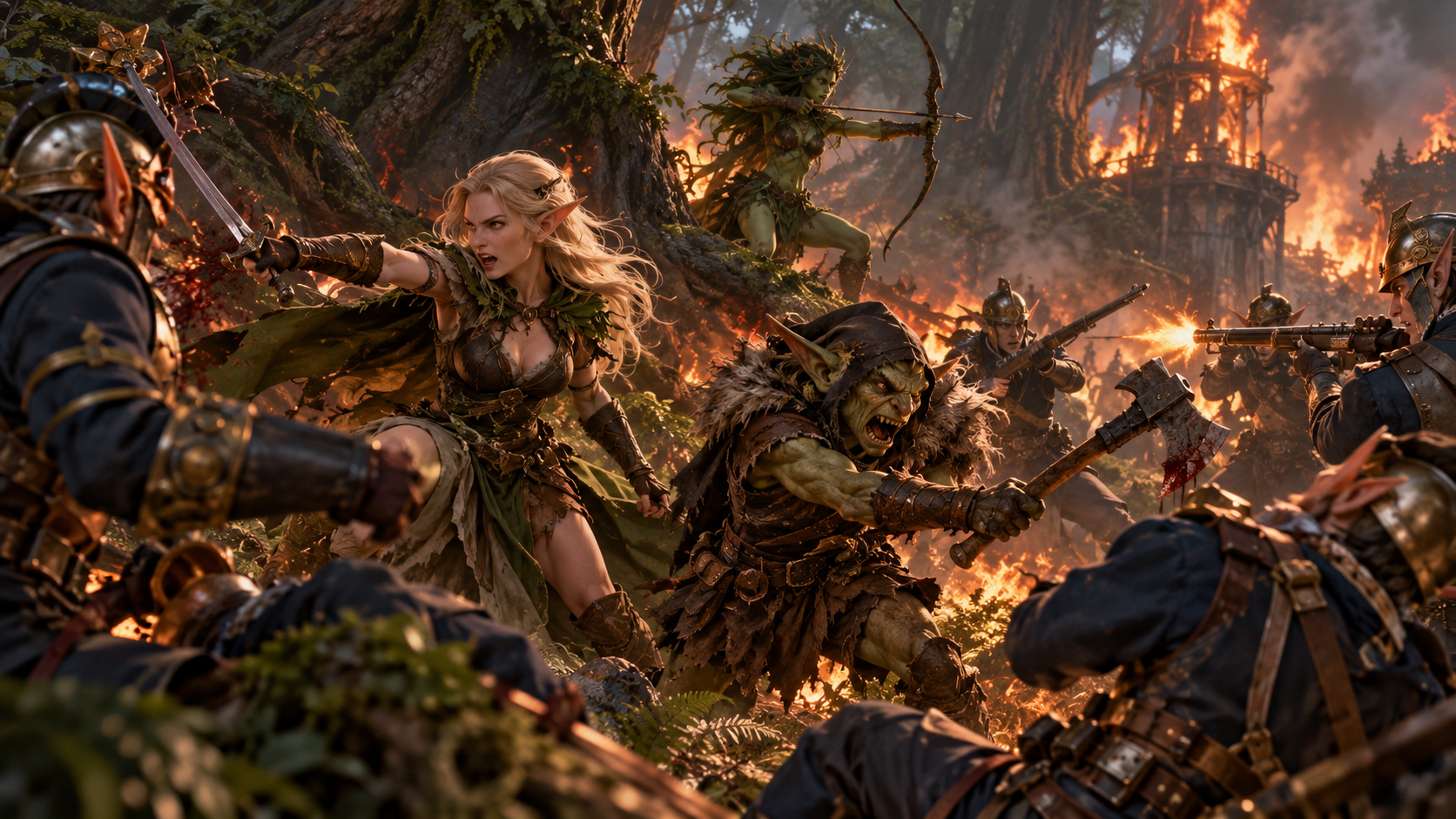
Metropolis launches its largest offensive yet, intending to divide Avalon with a fortified railway running directly through Yggdrasil's Heart. For the first time in Avalon's history, the defenders meet them as a single army. Seelie and Unseelie fairies manipulate the forest itself, elves ambush supply columns, nymphs flood roads and extinguish industrial fires, and goblins descend upon isolated Metropolitan positions.
The battle does not end the war. Metropolitan mines, farms, railways, and lumber mills still scar the eastern forest, and its empire possesses resources Avalon cannot match. But something fundamental has changed. For a thousand years, Avalon was a forest inhabited by peoples who happened to share the same land. Fairies fought fairies. Elves fought goblins. Goblins hunted everyone. Nymphs avoided the arguments whenever they could.
Metropolis has accomplished what centuries of diplomacy could not. It has given Avalon a common enemy—and, for the first time, a common identity.