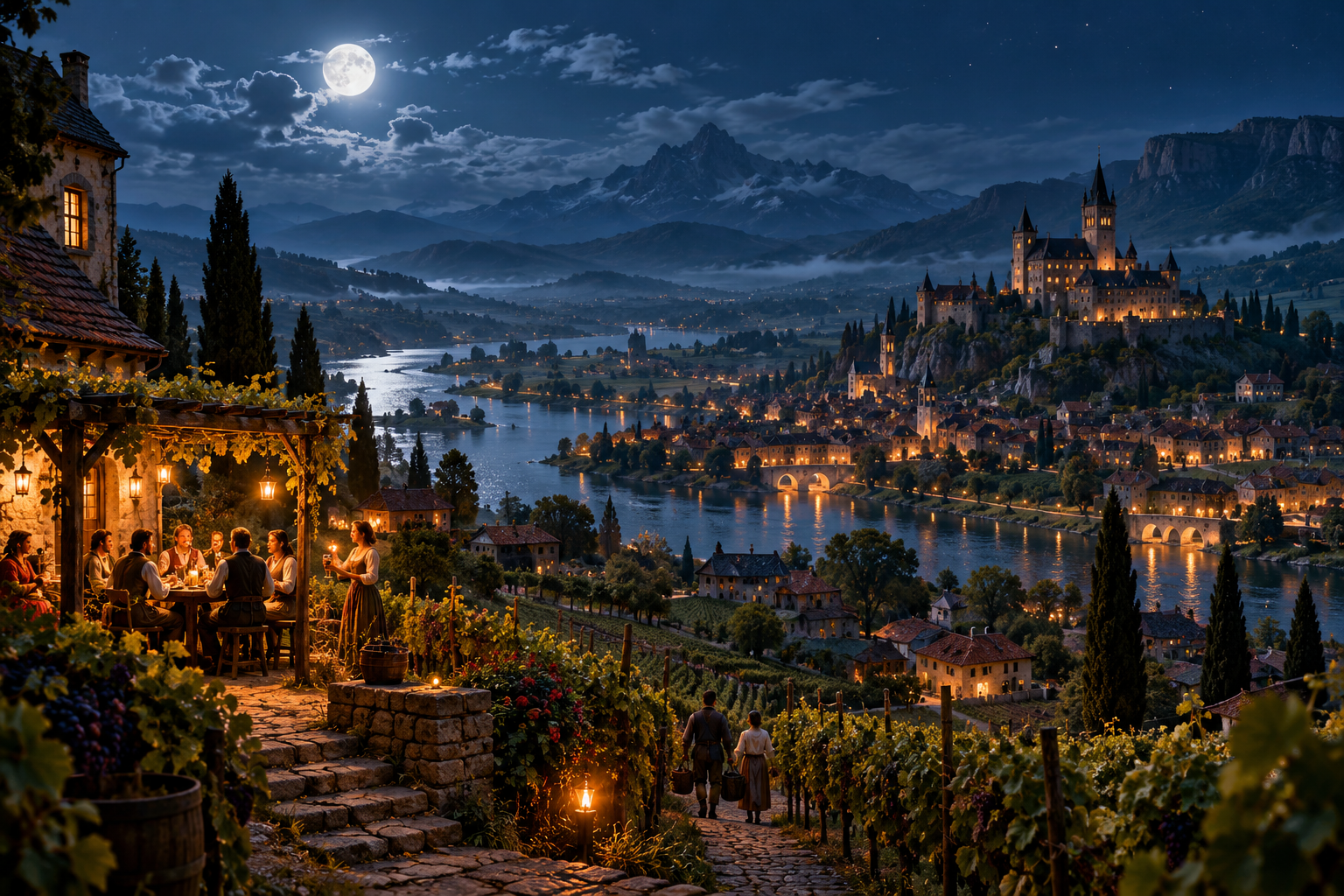
Human settlers establish the Kingdom of Transylvania across a vast region of rivers, wetlands, and exceptionally fertile black soil. Grain, flax, cattle, and fruit make the young kingdom prosperous. Early chronicles describe Transylvania as the Garden of the East.
Stories already circulate, however, about pale creatures living in caves and abandoned ruins.
A brutal winter brings famine to the northern counties. Travelers disappear from roads, livestock are found drained of blood, and terrified villagers begin digging up corpses suspected of returning from the dead.
The royal government dismisses the panic as superstition.
The ancient vampire Count Dracula emerges from obscurity and unites several powerful vampire bloodlines. Rather than openly conquering humanity, Dracula proposes a more sustainable arrangement: vampires will infiltrate the aristocracy, feed discreetly, and preserve the human population upon which they depend.
The Old Guard vampire aristocracy is born.
Following several unexplained deaths within noble families, Dracula's agents assume control of their estates. Through bribery, marriage, blackmail, and assassination, vampires quietly penetrate the royal court.
A secret agreement known as the Crimson Compact establishes feeding territories and forbids vampires from killing humans unnecessarily. The compact clarifies that humans are livestock, and lay guidelines to prevent the slaughter of the entire herd.
A wandering preacher named Father Andras preaches that vampirism is a curse inflicted by the gods for unforgivable sins. Over time, thousands rally behind him. The resulting pogrom kills several genuine vampires, but hundreds more ordinary humans accused of vampirism, witchcraft, grave-robbing, or simply behaving suspiciously.
The Slayer movement dies down within a few years, but Dracula and his followers practice increased caution and retreat into secrecy.
Vulcanian forces cross the mountains after a dispute over iron deposits and trade routes. Transylvania's poorly equipped human forces suffer catastrophic losses. At Dracula's behest, vampires intervene. An entire Vulcanian regiment is slaughtered on a moonless night and the invasion collapses. Rumors spread that something supernatural saved the kingdom.
The last independent human king dies without an heir. Instead of founding a new dynasty, power passes to the parliament Chamber of Lords. Most of its members are already vampires, vampire servants, or humans indebted to Dracula. Transylvania remains officially a human kingdom. In practice, political power passes permanently to the Old Guard.
Wealthy landowners begin draining Transylvania's wetlands to create additional farmland. Profits soar, but corruption allows projects to proceed without regard for rivers or existing villages. Flooding becomes increasingly severe. Poor farmers are displaced while aristocrats acquire enormous estates. The first great slums appear around Transylvania's cities.
Crop failures send food prices soaring while nobles continue exporting grain for profit. Hungry crowds storm warehouses in several cities. The government brings military force against its own citizens, putting a bloody end to the riots.
Criminal gangs flourish afterward, smuggling food, alcohol, stolen goods, and eventually blood. Desperate vampires increasingly purchase blood from criminals rather than risk hunting openly.
Organized criminals establish a permanent underground trade in human blood. Some comes voluntarily from impoverished people desperate for money. Much does not. Poor vampires become dependent upon these criminal suppliers. The Old Guard publicly condemns the trade while quietly tolerating it for the pragmatic reason that it reduces uncontrolled feeding.
An alchemist experimenting with fungi from the Transylvanian marshes produces a strange narcotic eventually called moomsh. Humans experience intense euphoria and hallucinations, while vampires experience something far stronger that even puts a temporary end to their bloodlust.
Demand explodes almost immediately. Only later do the side effects become apparent: bloodshot eyes, falling out of hair and teeth, tremors, and reduced blood flow to the extremities causing gangrene in extreme cases.
The flamboyant vampire Prince Yalmamir takes control of several criminal organizations involved in the moomsh trade. Rather than hiding from humans, Yalmamir surrounds himself with musicians, gamblers, courtesans, criminals, and fashionable young aristocrats.
His followers become known as the New Guard. Dracula never formally acknowledges them, but privately refers to them as "reckless upstarts."
Riding on Yalmamir's financial success, the vampire Gladys the Glorious transforms the New Guard from a criminal network into a cultural phenomenon. Lavish parties, gambling houses, theaters, fighting pits, brothels, and moomsh dens spread through the cities. New Guard vampires openly mingle with wealthy humans, while moomsh money buys politicians, constables, judges, newspapers, and entire neighborhoods.
The Old Guard still rules Transylvania, but the New Guard increasingly owns it.
Slayer preachers blame rising crime, disease, addiction, and poverty entirely on vampires. After the disappearance of several children, rumors spread that vampires are conducting mass sacrifices.
Mobs descend upon suspected vampire districts. Actual vampires are killed, but so are thousands of humans. Birthmarks, unusual teeth, nocturnal employment, foreign accents, and personal grudges become sufficient evidence of vampirism. The event becomes the largest pogrom in Transylvanian history.
Vulcania invades disputed territory along Transylvania's western frontier. This time Dracula openly deploys vampire soldiers alongside human troops. The invasion is repelled, but the revelation confirms centuries of rumors: vampires are not merely monsters hiding in Transylvania. They are part of its government. Slayer membership explodes.
Industrial representatives from Metropolis offer loans, machinery, and railway construction in exchange for mining and logging rights. The government accepts. Factories and railways modernize parts of Transylvania, but corrupt officials grant Metropolitan companies enormous concessions. Forests disappear, mines poison waterways, and displaced peasants crowd into already impoverished cities.
Transylvania grows richer on paper while much of its population grows poorer.
Competition over the drug trade erupts into open warfare between New Guard syndicates. Bombings, assassinations, kidnappings, and street battles become routine. Gladys the Glorious survives three assassination attempts in one month and responds by eliminating nearly an entire rival vampire family.
Dracula orders Yalmamir and Gladys to be tried under the terms of the Crimson Compact, but they openly refuse his summons.
Tens of thousands of unemployed laborers, ruined farmers, veterans, and addicts march upon the capital demanding food, land reform, and restrictions on Metropolitan companies. Slayers infiltrate the demonstration and claim vampires are preparing a coup. The resulting riot lasts six days and leaves entire districts burned.
Dracula refuses to make a statement, dismissing the march as a temporary disturbance rather than acknowledging the mounting issues within the state.
Bishop Marek, one of the few prominent Slayers advocating investigations rather than indiscriminate pogroms, is murdered in his sleep. Slayer leaders immediately accuse Dracula, while New Guard-controlled newspapers accuse the Slayers themselves. The Old Guard blames Metropolitan agents, but Metropolis denies involvement. The assassin is never identified.
Marek's death destroys the moderate wing of the Slayer movement and leaves increasingly fanatical leaders in control.
After a vampire kills a human family while apparently intoxicated on moomsh, Slayer organizations call for mass demonstrations. Rioting spreads across the country and suspected vampires are dragged from homes. Vampire gangs retaliate. Human criminals loot businesses belonging to both sides. New Guard enforcers fight Slayers in the streets while Old Guard soldiers impose curfews and execute rioters without trial.
Ordinary Transylvanians barricade their doors and wait for everyone else to stop killing each other.
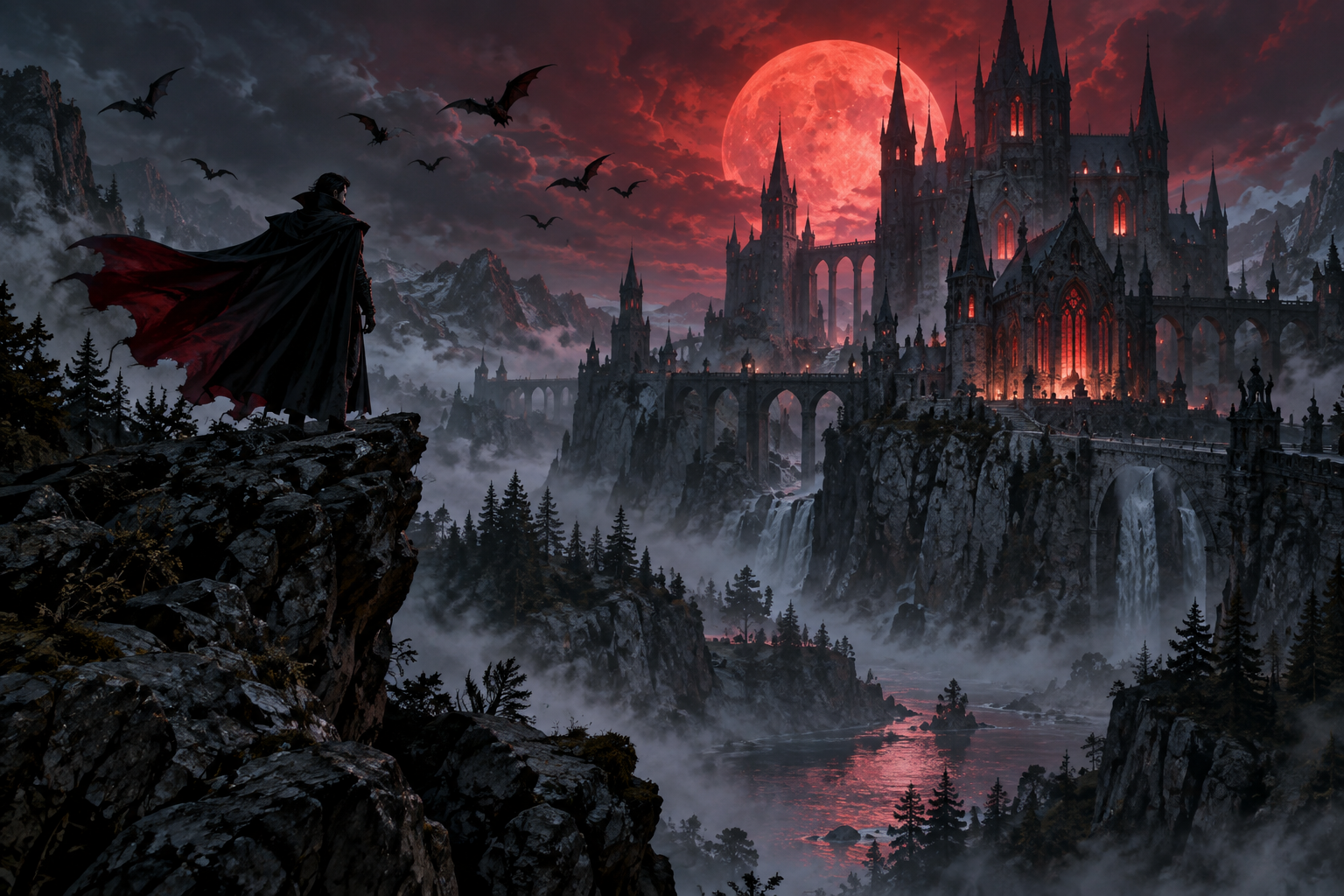
A thousand years after its founding, the Garden of the East has become almost unrecognizable. Once-fertile wetlands have been drained, polluted, or abandoned. Metropolitan mines scar the hills. Farms are concentrated in the hands of absentee landlords. Moomsh dens operate beside churches and gambling houses. Criminal gangs sell blood to desperate vampires while impoverished humans sometimes sell their own blood simply to eat.
Count Dracula and the Old Guard remain the unquestioned political rulers, but the New Guard dominates nightlife, organized crime, fashion, entertainment, and the enormously profitable moomsh trade. Their wealth rivals that of the state itself.
The Slayers patrol frightened communities preaching that every unexplained death, missing child, failed harvest, and nighttime noise might be evidence of vampires. Sometimes they are right. Often they are not.
And between them live millions of ordinary humans—and countless impoverished vampires—who belong to none of these factions.